
Operazione Chastise. 1943. Il raid dei Dambusters i guastatori delle dighe / Max Hastings ; traduzione di Filippo Verzotto. – Vicenza : Neri Pozza, 2022. – 350 p. : ill. ; 22 cm.
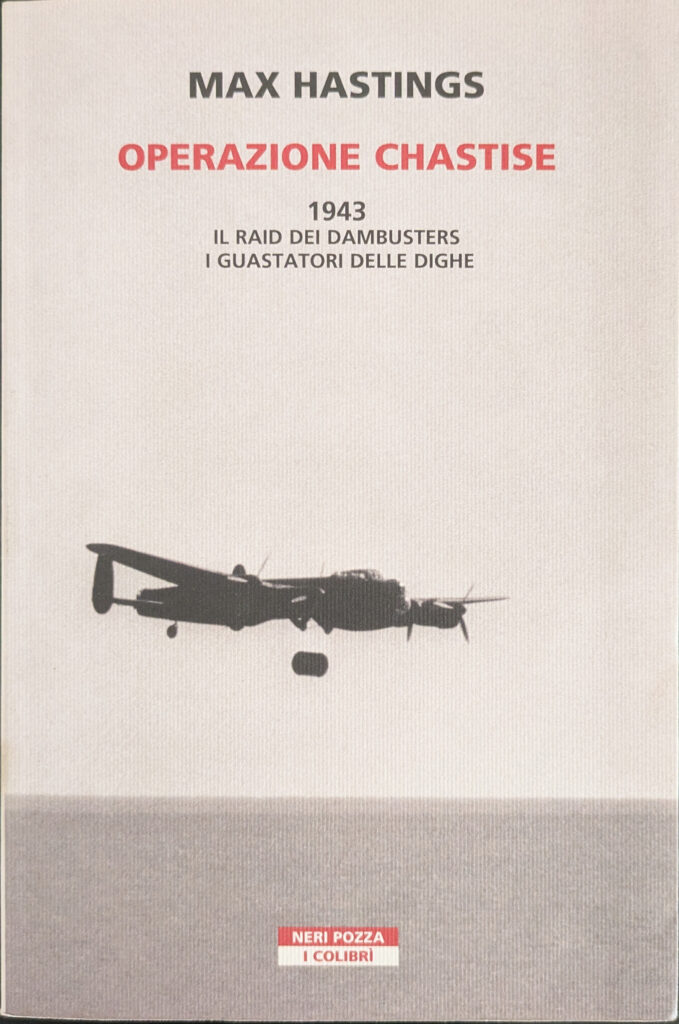
Nella notte tra il 16 e il 17 maggio 1943 uno stormo di aerei, il 617 o squadrone composto da centotrenta aviatori britannici, canadesi e australiani, un americano e due neozelandesi, sorvolò la Germania nordoccidentale e distrusse le dighe dei bacini idrici dell’Eder e della Möhne con delle “bombe rimbalzanti”, rovesciandone a valle le acque. Il raid, noto come Operazione Chastise (Castigo), costò la vita a ben cinquantatré dei giovani aviatori che l’eseguirono e, nel Regno Unito dell’immediato dopoguerra, fu subito annoverato tra «quei racconti a sfondo storico – al pari di re Artù o di Robin Hood – che si sottraggono a ogni tentativo di rilettura critica da parte degli studiosi», come scrisse il biografo del comandante di stormo Guy Gibson. Nel 1955, I guastatori delle dighe, il film britannico dedicato all’impresa, fu perciò accolto con entusiasmo dall’opinione pubblica, convinta che il raid non avesse lasciato vittime se non gli eroici cinquantatré giovani aviatori. In realtà, nell’Operazione Chastise, nota in Germania come Möhnekatastrophe, perirono circa millequattrocento persone, quasi tutte civili, quasi tutte donne di nazionalità francese, polacca, russa e ucraina: più che in qualunque precedente attacco condotto dalla RAF sul Reich. Una strage di civili, per la maggior parte vittime di Adolf Hitler, che si inquadra nella controversa offensiva condotta dagli Alleati con i bombardieri durante la seconda guerra mondiale. Questo libro nasce dall’esigenza di raccontare di nuovo, e di riconsiderare, la vicenda dell’Operazione Chastise con la speranza di offrire una nuova prospettiva. Un compito arduo per Max Hastings, che conserva ancora «il timore reverenziale provato da bambino per i piloti che avevano fatto esondare la Möhne e l’Eder». Un compito, tuttavia, ineludibile per uno storico che voglia accertare i fatti, e stabilire in questo caso «se la straordinaria storia dell’Operazione Chastise – l’impatto che ebbe sulla seconda guerra mondiale a fronte delle conseguenze umane – si lasci redimere dalla gloria». «Un eroe della Resistenza norvegese, Knut Lier-Hansen, nel 1948 scrisse delle parole che mi risuonano in mente ogni volta che mi accingo a raccontare un conflitto: “Sì, le guerre possono portare con sé avventure che scaldano il cuore, ma la vera natura della guerra è fatta di innumerevoli tragedie personali, di pena, sperpero e sacrificio, di una malvagità totale che la gloria non redime”».
On the night between May 16 and 17, 1943, a squadron of aircraft — No. 617 Squadron, composed of one hundred and thirty British, Canadian, and Australian airmen, along with one American and two New Zealanders — flew over northwestern Germany and destroyed the dams of the Eder and Möhne reservoirs with “bouncing bombs,” unleashing the waters downstream. The raid, known as Operation Chastise, cost the lives of as many as fifty-three of the young airmen who carried it out, and, in postwar Britain, it was soon counted among “those historically themed tales — like those of King Arthur or Robin Hood — that elude any attempt at critical reinterpretation by scholars,” as the biographer of Wing Commander Guy Gibson wrote.
In 1955, The Dam Busters, the British film dedicated to the mission, was therefore received enthusiastically by the public, convinced that the raid had claimed no victims other than the heroic fifty-three young airmen. In reality, during Operation Chastise—known in Germany as the Möhnekatastrophe—around fourteen hundred people perished, almost all civilians, and almost all women of French, Polish, Russian, and Ukrainian nationality: more than in any previous attack carried out by the RAF on the Reich.
A massacre of civilians—most of them already victims of Adolf Hitler—that must be seen within the context of the controversial air offensive waged by the Allies during the Second World War.
This book arises from the need to tell anew, and to reconsider, the story of Operation Chastise, in the hope of offering a new perspective. It is a daunting task for Max Hastings, who still “feels the reverent awe he experienced as a child toward the pilots who made the Möhne and the Eder overflow.” Yet it is also an inescapable duty for any historian who wishes to ascertain the facts, and to determine in this case “whether the extraordinary story of Operation Chastise — its impact on the Second World War weighed against its human consequences — can be redeemed by glory.”
“A hero of the Norwegian Resistance, Knut Lier-Hansen, wrote words in 1948 that echo in my mind every time I set out to recount a conflict: ‘Yes, wars may bring with them adventures that warm the heart, but the true nature of war is made up of countless personal tragedies, of pain, waste, and sacrifice — of an utter evil that glory does not redeem.’”